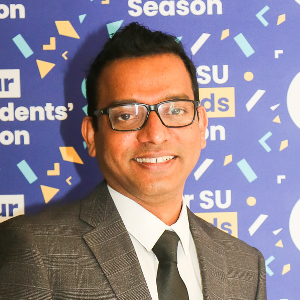

Prof Muhammad Mustafa Kamal
8 articlesBiography
Muhammad Mustafa Kamal, an Associate Professor in Sustainable Operations and Analytics and Deputy Head of the Operations and Analytics Department at the University of Exeter Business School, brings a wealth of academic expertise and a commitment to fostering collaborative scholarly and research initiatives. Prior to joining the University of Exeter, Kamal was an Associate Professor in Supply Chain Management, and Curriculum Lead (Head of Subject Group) in Business Analytics and Digital Transformation. He earned his PhD in Information Systems from Brunel University London, focusing on the adoption and evaluation of enterprise integration technologies in local government authorities in the United Kingdom. As a participant in numerous research grants bringing in income well over £1million, Kamal has published over 100 research papers exploring the technological paradoxes and artificial intelligence implementation, supply chain digitalisation, emergency medical supplies scheduling, digitalisation in omnichannel healthcare supply chain businesses, adoption of additive manufacturing for sustainable operations, impact of big data analytics on supply chain operations, enabling circular supply chain artificial intelligence adoption in food supply chains, value co-creation through social innovation, enabling sustainable energy futures, green supply chain collaboration, and analysing supply chain integration, and circular economy implementation. He is a regular presenter at UK, EU, and international conferences such as BAM, AMCIS, ECIS, HICSS, EMCIS and also published in POMS, IPSERA and Logistics Research Network. In addition to his academic achievements, Kamal has played pivotal roles in significant research capacity building projects. As a Co-Investigator, he contributed to a joint program initiated by the British Council in Pakistan and the Higher Education Commission (HEC). This programme aimed to strengthen partnerships between higher education sectors in Pakistan and the UK, with a focus on enhancing the capacity of Higher Education Institutions (HEIs) for knowledge generation and research uptake. Kamal's contributions encompassed training potential researchers in writing competitive grant proposals, offering tailored support for female PIs, training reviewers in line with international best practices, enhancing the research management capacity of Pakistan university Offices of Research, Innovation, and Commercialization (ORICs), and providing training and support to PIs and Co-PIs on research project management. Moreover, Kamal continued his commitment to capacity building in Pakistan through a programme focused on enhancing the capabilities of PhD supervisors in HEIs. Partnering with Coventry University, this initiative aimed to address the challenges faced by HEIs in developing regions, particularly in terms of generating and disseminating new knowledge. Kamal, as a Co-Investigator, played a crucial role in developing baseline studies, conducting in-depth interviews with academics in Pakistan HEIs, and providing training to enhance supervisory skills for PhD students. This project aligns with the Sustainable Development Goal (SDG) of Quality Education, promoting inclusive and equitable quality education opportunities. Successful third-party evaluation of the Supervisor Capacity Building training is a testament to the significant influence on various cohorts and the enduring impact it promises for supervisor development and training in Pakistan in the future. The impact of Kamal's work is not confined to academia alone. As a project and academic lead for bespoke training programmes, he has successfully led projects such as Strategy Training and Risk Management Training for the Civil Service Workforce (DCMS and DIT), contributing to the enhancement of professional skills in governmental departments, generating around £62,500. Besides this, his commitment to knowledge exchange is reflected in initiatives like the knowledge exchange program for Indonesian students, fostering international collaboration and enriching the educational experience, resulting in generating £25k income. Kamal's leadership and contributions in these projects underscore his dedication to advancing research capacity, fostering international collaborations, and supporting the development of a knowledge-based economy, particularly in the context of higher education landscape. His multidimensional role as an academic, researcher, and collaborator positions him as a key contributor to the intersection of academia and global research initiatives. Notably, he has successfully supervised 21 PhD completions, further highlighting his expertise and impact in the field. He has published in a wide range of Business & Management academic journals, including Technological Forecasting and Social Change, International Journal of Production Research, Journal of Business Research, Computers and Industrial Engineering, Production, Planning and Control, Information Systems Frontiers, Information Technology and People, Information Systems Management, Journal of Global Information Management, Journal of Enterprise Information Management, Industrial Marketing Management, Information Technology and People, Government Information Quarterly, Information and Management, Supply Chain Management: An International Journal, Expert Systems with Applications, and Journal of the Operational Research Society.