Abstract
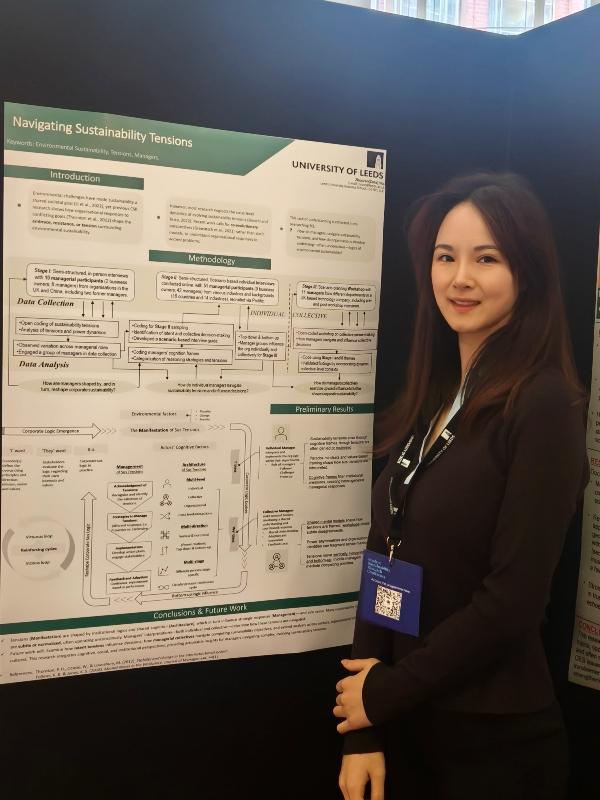
Tensions are an unavoidable experience for companies dealing with economic, social and environmental issues simultaneously. I conducted a systematic review of 262 scholarly articles and 17 grey literature sources, employing a qualitative synthesis approach to interpret and integrate the findings. I found that: First, it reveals that sustainability tensions arise from both external pressures (e.g., institutional isomorphism) and internal cognitive factors (e.g. cognitive frames). It also highlights how misalignments between managerial cognition and organizational logics pose significant challenges, as corporate logics often evolve from individual ("I think") to collective ("we think") perspectives, where collective cognition simultaneously enables and constrains the very logic it reinforces. Furthermore, the review synthesizes existing research on sustainability strategies, showing a predominant focus on proactive approaches, which offer both short- and long-term benefits, while recent studies also highlight the potential for success in defensive strategies. Lastly, it underscores the complex nature of management strategies in sustainability contexts, strategies that are multi-level, multi-stage, and multi-directional, often addressing multiple tensions and evolving over time, thereby necessitating comprehensive and adaptive approaches.
This study reveals important knowledge gaps related to (1) the need for defensive strategies and new proactive approaches in varied contexts and its contingency effects; (2) the need to understand underlying process mechanisms linking tensions with outcomes, and research on dynamics within and across levels (i.e., collective level); (3) the need for methodological approaches that will help address these substantive knowledge gaps; (4) and a unified standard for sustainability outcomes is needed. Accordingly, I present a comprehensive research agenda for the future, grounded in a multilevel perspective that seeks to integrate diverse strategies while also deepening our understanding of the underlying mechanisms and microfoundations of sustainability tensions. The practical implications highlight that organizations can more effectively manage sustainability tensions by recognizing and addressing them at various stages, ultimately improving decision-making processes.